
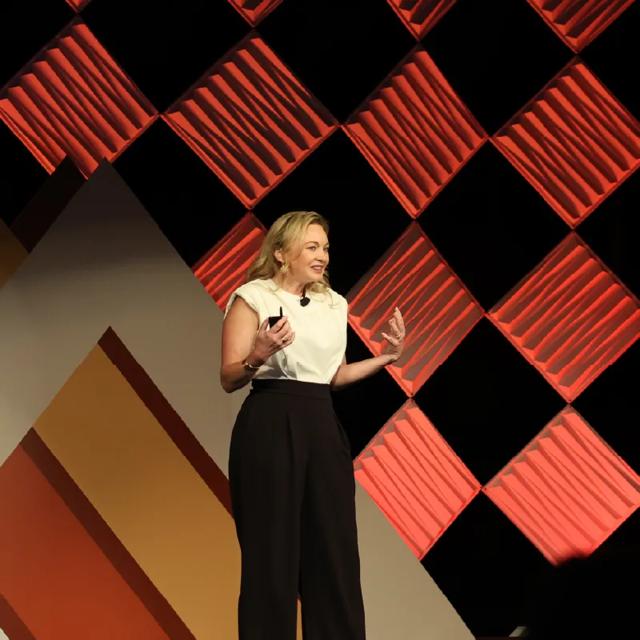
In almost every conversation with people across the Sales Performance Management (SPM) industry over the past year, with the advancement of AI, the same anxiety has been underneath: Is what I do still going to matter?
It’s a rational response to a force that feels both inevitable and fast. But the frame itself is working against us, because it orients us toward defense at exactly the moment that calls for something different. Conversations around AI tend to produce two primary questions: 1) “What does this mean for my role?” 2) “What could I do with this that I’ve never been able to do before?”
The first person took a posture of resistance, and the second person of wonderment. Wonderment is a sophisticated response to disruption. So let’s reframe the question. It’s not, “Will AI take my job?”
The question is, “What does AI make possible for humans, and what does it cost us if we are too afraid to find out?”
The Threat Isn’t AI: Why Human Potential is the Ultimate Catalyst
The parts of roles AI is eliminating were never fully human roles to begin with. The work of manual reconciliation. Cross-referencing quota data across systems that don’t talk to each other. Running the same report 12 ways to double-check yourself. That work was never the work humans were born to do. It was the work that filled the space where human capability should’ve been.
The threat is not AI. The threat is optimizing the work and forgetting to protect what makes it meaningful. We’re at a moment where technology can finally free up our capacity to focus on higher-impact work. The work of creativity, trust, connection, interpretation, and strategy. The work that only a person can do.
That’s the upside, but it’s not automatic. People have always deliberately and repeatedly chosen to make technology work for us. But technology moves faster than trust. Why? Because trust has to be built in real time, in conditions nobody fully prepared for.
And now, at this point in the AI journey, nobody has the full map. Not the leaders. Not the practitioners. Not the people who’ve been living inside systems and building with AI tools. We’re all, to some degree, figuring this out together.
That shared uncertainty isn’t a weakness. It’s actually the starting point for something more durable.
Puzzles Over Problems: A New Leadership Mindset
Problems demand a solution. A puzzle invites a question. And the question of this moment is a trust question: how do we build an environment where people feel safe enough to learn, honest enough to name what they don’t know, and connected enough to find out together?
This is the puzzle at the center of AI transformation.
It doesn’t get solved once. It gets tended. That’s what the uncharted territory of AI transformation actually asks of us. Not certainty. Trustworthiness.
No single person holds the whole puzzle. But everyone holds a piece. The organizations that get this right will be the ones where people bring their piece to the table: honestly, curiously, and with enough trust in each other to see what it builds together.
We’ve been trained to think of AI as software. You configure it. You maintain it. You update it. This model is out of date and not serving people well. A more useful frame is to think about AI agents as colleagues with a specific job to do.
We’ve been trained to think of AI as software. You configure it. You maintain it. You update it. This model is out of date and not serving people well. A more useful frame is to think about AI agents as colleagues with a specific job to do.
You wouldn’t distrust a new colleague on Day 1. But you also wouldn’t hand them the keys without first watching them work, training them, and building confidence in them over time. Trust in agents works exactly the way trust in a person works. It’s earned through experience. It’s built by seeing them perform. It’s calibrated by understanding where they need a human alongside them.
That’s s a deeply familiar dynamic for anyone who’s ever onboarded a new team member. We only need to apply that same kind of thinking to a new kind of colleague.
The Orchestrator Shift: Human on the Loop
As we move from Sales Performance Management (SPM) to Sales Performance Orchestration (SPO), the role of the professional changes. We’re moving away from manual administration and toward strategic oversight.
You may have heard the phrase "human in the loop," the idea that a human sits at every checkpoint, approving each decision before the system proceeds. That concept made sense when learning to trust the technology.
What we’re moving toward now is “human on the loop.” The AI is operating, and a human is engaged at a higher altitude, setting the guardrails, watching for patterns, stepping in when something requires full judgment. They’re not embedded in every step; they’re elevated above it.
This becomes a competitive advantage. “Human in the loop” is a judgment posture where every checkpoint closes a question. “Human on the loop” is a curious posture where you’re watching for the question you haven’t thought to ask yet. Questions like:
- What is the platform surfacing that I have not been looking for?
- Where is the anomaly that does not fit the model?
Judgment closes a question. Curiosity opens one. And the organizations that get the most from this technology won’t be the ones with the most disciplined approvers. They’ll be the ones with the most genuinely curious observers.
Agentic AI Changing Job Roles for the Better
Fear, uncertainty, and doubt aren’t irrational. The work’s changing. The roles are evolving. But here’s a picture of what’s actually on the other side.
AI will change jobs, but that’s not a bad thing. It’s removing the parts of work that’ve been quietly draining people: the reconciliations, the rework, the data hunting, tedium. Those parts are going away. What’s left is the work that actually matters.
- Think about the analyst who’s spent years being the person who keeps the system running: accurate, current, compliant. That person has always had instincts for what the data is actually saying, for where the design is broken, for what should change, and why. They’ve just never had the bandwidth to act on them. Give them an agent that handles the maintenance layer, and suddenly, they stop being the person who runs the system. They become the person who questions it.
- Think about the HR professional who’s spent more hours managing documentation and process than having the conversations that matter. With the administrative layer handled, they’re back in the room with their people. They’re coaching, listening, and reading what the data can’t: that this person is burning out, that this team is losing its footing, that this manager is building something worth sharing.
- Think about the leader who spends the back half of every quarter in reactive mode, managing exceptions, fielding the same questions, responding to the urgent instead of the important. When AI handles the routine, the leader handles the consequential.
This is what an agentified, AI-powered human looks like in this era. Not a person competing with a machine for the same task. But a person finally freed to do the work the machine never could, the work that requires being in the room, reading what isn’t in the data, and caring about what happens to a specific person.
Leading the Human Side of the AI Era
The people in organizations who are anxious about this moment aren’t weak. Many of them are a company’s most thoughtful, most engaged, most invested employees. They care enough about their work to worry about what changes to that work mean. That isn’t a flaw. It’s a signal worth a leader’s attention.
Three things I’ve seen work consistently across organizations navigating this well:
- Name the change. Be honest. Say what’s shifting, what’s holding, and what you genuinely don’t know yet. Uncertainty spoken out loud is far less unsettling than uncertainty left to someone else's imagination.
- Learn vulnerably and visibly. As a leader, let yourself be seen figuring it out. In a room full of people exuding confidence with AI tools and skills, saying, "I’m still learning this" is one of the bravest things a leader can do. It signals that it’s safe for everyone else to learn alongside you.
- Have the avoided conversation. The one you’ve been putting off. The one where you don’t have a clean answer yet. The one that feels too uncertain to start. Bravery is not the absence of discomfort. It’s the decision to move through it anyway.
The Future of AI is Still About People
The organizations that win this AI era won’t be the ones with the most advanced platform. They’ll be the ones who figured out how to amplify human intelligence with it. It requires a choice, repeated and intentional, to treat the human side of this AI transformation with the same investment and attention as the technology side.
AI has the potential to give us something rare: genuine space. Ask what you would do with your time if the routine were handled. Not the tasks you would catch up on. The work that actually matters to you. The questions you’ve never had space to sit with. Be curious. That’s what this technology is pointing toward. Beyond an efficiency gain: An invitation to reconnect to the work that made you choose this field in the first place.
Have one honest conversation this week about what is changing. With a colleague, a peer, someone whose work looks different than it did a year ago, or will look different a year from now. Don’t focus on what’s being replaced, but what becomes possible.
The AI transformation will be communicated in organizational terms: roadmaps, milestones, and business cases. That matters. But it doesn’t move people. What lives inside those terms (the human story, the individual meaning, the heartbeat), that’s ours to protect.
People and Technology. Not people versus technology. We’re the Agents of Change. We decide whether this era amplifies our humanity or overrides it.