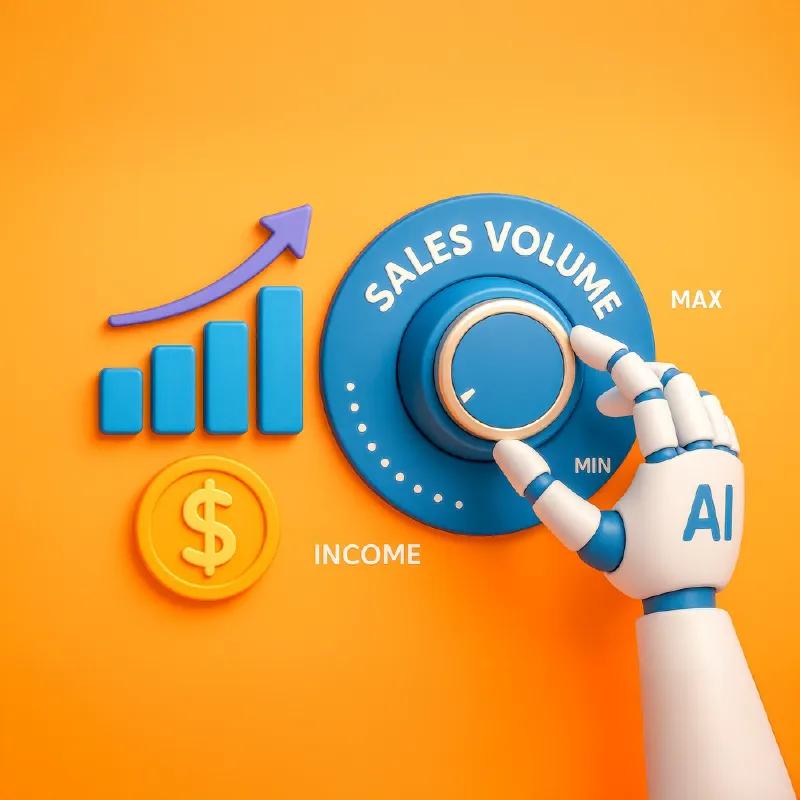
Cut through the noise and chart your course to world-class revenue performance with real-time insights and enhanced pipeline visualization in customizable forecasting views--all in a single source of truth. Unlock your go-to-market potential with Xactly’s revenue forecasting software, regardless of your business model.

Xactly Pipeline & Sales Forecasting Solutions
Combine wide-ranging revenue data with award-winning AI-powered insights into our revenue forecasting tools. Get an objective lens into your pipeline, own strategy, and accelerate go-to-market success.

A Catalyst for Accurate Forecasts
Take advantage of your wealth of CRM data to inform the health of your revenue pipeline and deliver accurate and predictable forecasts.
Be One with Your Pipeline
Identify pipeline changes quickly, see where deals have moved, and mitigate deal slip.
Supplement Gut Instinct with AI
Remove potential bias with objective, future-looking visibility into your revenue numbers.

Drive Winning Behaviors
Promote effective sales execution by guiding sellers on best next actions, opportunity milestones and actionable alerts to move deals forward.
XACTLY INTELLIGENCE
Generic forecasting AI looks at your pipeline. Xactly Intelligence looks at your pipeline, your business, and plus 21+ years of how reps actually behave when comp is on the line. It removes bias, flags risks, and surfaces deals worth chasing your team hasn't prioritized yet.
AI that is built on 21+ years of forecasting data.

Bias-Free Forecasting
Removes sandbagging and over-optimism using two decades of how reps behave at every stage of the quarter.

Attrition Risk Signals
Detects when comp dissatisfaction is pulling a rep toward the door, weeks before it shows in their pipeline.

Conversational Insights
Ask "what's at risk this quarter?" and get a data-backed, explainable, answer
Teams need data-driven forecasting
Sales forecasting is a critical process that pulls on different data sets from different Marketing, Operations, and Sales departments to gain insights and suggest strategies. However, forecast accuracy is still a major challenge. Xactly Forecast transforms sales, revenue operations, and financial teams with consistent and connected real-time and historical data, promoting strategic alignment to meet and beat your number.

CRO / CSO
Manage and monitor overall sales performance and track sales execution using interactive dashboards. Leverage predictive analytics to provide sales and revenue forecasts that won’t surprise you.
Revenue / Sales Operations
Use sales forecasting tools to manage day-to-day sales and revenue performance. Use pipeline analytics to track performance, and proactively identify risks and opportunities.

Sales Leader
Track individual and team sales performance. Identify opportunities in the pipeline and manage guided selling processes through individual coaching.
Finance Leader
Use real-time analytics to track sales revenue and monitor financial performance. Easily automate commission exposure and identify barriers to achieving sales targets.

It’s more than just the metrics. It’s about streamlining and collating activities. By limiting the time people spend juggling information, we can provide the centralized data our C-suite needs in real-time.

There is no paper floating around anymore. Everything is online, dynamic, and in real-time. This has been our strategy, and Xactly's products complement this strategy with their availability in the cloud.

With Xactly Forecast, we turn CRM data into actionable information leading to improved quality of the pipeline, on-time activities of the sellers about the customer buying journey and enhanced visibility of the pipeline performance to the leadership.
Industry Leading Sales Forecasting Software, Trusted by Customers and Users






Sales Forecasting Software FAQs
What is sales forecasting software?
Sales forecasting software is a tool that uses historical data, pipeline information, and predictive analytics to estimate an individual's and, in aggregate, the company's future revenue and sales. It helps businesses make better decisions about resource allocation, inventory management, budgeting, and goal setting.
How does sales forecasting software work?
Sales forecasting software aggregates data from the company's CRM system, as well as from other structured and unstructured customer data sources, including emails and call records, to provide an overall view of identified sales opportunities in the pipeline. Using predictive techniques, sales forecasting software allocates risks and estimates deal closure rates from historical records to create a realistic sales projection that takes into account the current sales pipeline and future sales opportunities.
How do I choose the best forecasting software?
There are many factors to consider. The most important factor is selecting software that matches your organization's sales forecasting strategy and has a proven track record of accurate forecasting capabilities.
Data-driven forecasting software uses granular information, and it should incorporate true predictive analytics capabilities. Other factors to consider include data visualization capabilities, sales modeling, scalability, and the ability to automatically integrate data from corporate systems, including AI-powered data that is connected to sales planning and compensation.
Why is Xactly Forecast the right choice for your sales team?
Achieve accurate forecasts with Xactly sales forecasting software. Using data-driven pipeline analytics, Xactly Forecasting empowers revenue leaders to inspect and manage their pipeline more effectively and sellers to close deals more efficiently.
Does the sales forecasting software support AI-driven forecasting?
Yes, Xactly’s AI-powered forecasting models improve predictability by shifting from "gut feel" to unbiased data signals. Unlike traditional sales forecasting methods, AI sales forecasting analyzes thousands of data points, including email sentiment, meeting frequency, and historical rep performance, to assign a "Health Score" to every deal.
By identifying patterns that lead to wins or losses, AI can flag "at-risk" revenue weeks before a human manager might notice. This allows leadership to move from reactive troubleshooting to proactive strategy, consistently landing within 5% of their quarterly targets.
How does the sales forecasting software improve forecast accuracy?
Xactly’s sales forecasting software replaces "gut feelings" and manual spreadsheets with objective, data-driven sales forecasting. The AI and machine learning within the platform analyzes historical trends, rep performance, and real-time pipeline data to generate highly accurate, predictive forecasts.
The result is drastically reduced human bias and manual calculation errors, giving your revenue leaders a forecast they can trust.
Can the sales forecasting software help you improve pipeline forecasting accuracy across regions?
Yes. The software is designed to standardize your forecasting across your entire global organization. It provides a single source of truth that regional managers can use to evaluate and roll up data using consistent metrics.
This eliminates disconnected regional silos and account sales cycles and gives executive leadership accurate visibility into the global pipeline.
Does Xactly’s sales forecasting software integrate with other systems?
Yes, Xactly’s platform integrates with other existing tech stacks. The system also includes native integrations with major CRM platforms, as well as leading ERP and HRIS systems, providing seamless connectivity that ensures a continuous, automated flow of real-time data, keeping your forecasts up-to-date without the need for tedious manual data entry.
Can the sales forecasting software help identify pipeline risks?
Yes, Xactly Forecast helps organizations proactively identify risk by continuously monitoring deal health signals, such as pushed close dates, lack of recent engagement, or stalled deal stages.
When the software detects anomalies or negative trends, it automatically flags these at-risk opportunities and allows sales managers to intervene, course-correct, and coach reps before deals are lost.
How will Xactly ensure my business implements the sales forecasting software successfully?
Xactly partners with you every step of the way to ensure a smooth and successful rollout. You’re supported by a dedicated implementation team that assists with data integration, system configuration, and strategic best practices.
How can leaders use sales forecasting software to benchmark accuracy against their peers?
Leaders can benchmark accuracy by tracking their Mean Absolute Percentage Error (MAPE) and comparing it to industry standards. For B2B SaaS organizations, "world-class" performance is typically defined as maintaining 90%+ accuracy within the first 30 days of a quarter.
Leaders also use cohort analysis to benchmark internal teams against each other, identifying "sandbaggers" (those who consistently beat low forecasts) versus "optimists" (those who consistently miss high forecasts), ensuring the entire organization moves toward a standardized "accuracy culture."
Can companies use the sales forecasting system to improve the accuracy of forecasting across regions?
Yes. You can use Xactly Forecast to improve the accuracy of sales forecasting across different regions and countries.