
With Xactly’s Management by Objectives (MBO) software, drive performance and revenue by aligning employee behaviors to company goals with our employee performance management software.

Optimizing MBO Business Plans with Xactly
Align individual goals with organizational objectives through a collaborative process involving specific goal setting, continuous monitoring, feedback and review, and performance evaluation.
Automated MBO Processes
Quickly and easily deploy customized management by objectives (MBO) plans and score employee performance in just minutes.
Centralized Platform
Manage all bonus information with our employee performance management software, giving the entire organization access to real-time updates and eliminating the need to track multiple spreadsheets.

On-Demand MBO Plan Visibility
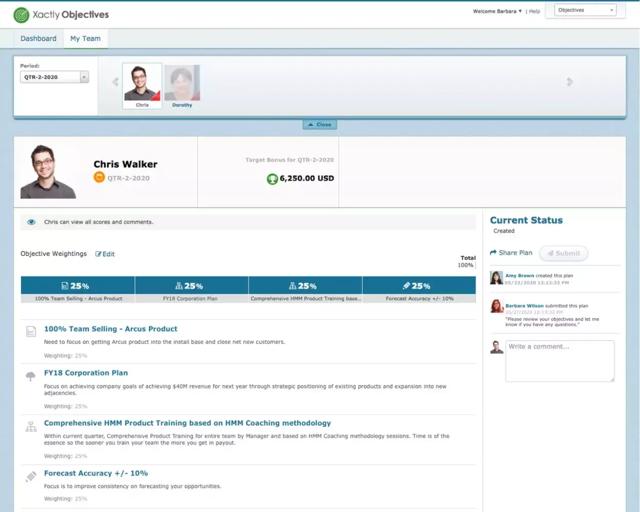
Motivate performance and align behaviors with company objectives by giving employees increased visibility into goals and online access to track expected bonuses.
User-friendly Interface
Increases employee engagement and inspire performance through increased involvement and visibility into goals.
Motivate performance, align behaviors.
Use company objectives to drive the right performance, giving employees increased visibility into goals and online access to track expected bonuses.
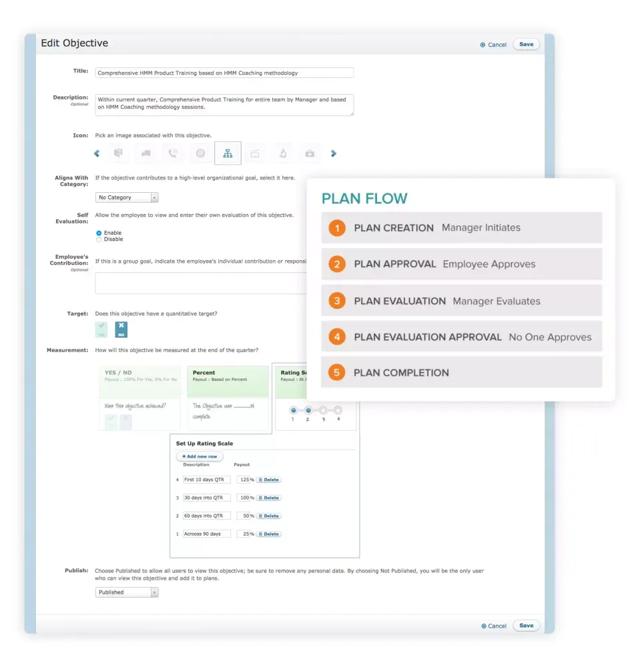
Continuous employee and manager coaching.
Improve organizational alignment and employee performance management with clearly defined, measurable, and agreed-upon goals through personalized coaching. Based on performance trends collected in the platform, you can tailor specific objectives to each rep that address their current performance level and guide them toward their goals. And with the emergence of OKRs (Objectives and Key Results) evolving from MBOs, you can drive your team further into goals through measurable Key Results (ie. increased quarterly deal closings by 20%, reduced sales cycle by 15%, etc.) as clear progress indicators for alignment and agility in fast-paced environments.

I wanted to be able to do things ourselves… and the other thing I really liked was the remote access to the field where they could see their incentive statements on the fly
We said, you know what there's pieces of this information that already exist in Incent. So can we integrate the pieces of that information back into this app we're creating? That was a big thing for us.
Like roster management, we decided, instead of somebody going through and clicking a box for each individual person, we said: ‘can we do something by title?’ And they were able to pull titles straight from Incent. And then we can create a roster based on those titles.
Frequently Asked Questions
What is management by objectives?
Management by Objectives (MBO) is a strategic management model that aims to improve organizational performance by clearly defining objectives that are agreed upon by both management and employees. First popularized by Peter Drucker in 1954, it focuses on results rather than activities. The core idea is that by involving employees in setting their own goals, they become more motivated and committed to achieving the company’s broader mission.
What are purposes of management by objectives?
The primary purposes of MBO are to align individual effort with organizational strategy and to foster a culture of accountability. Key objectives include:
Goal Alignment: Ensuring every employee’s work contributes directly to the company's top-level goals.
Motivation and Engagement: Boosting morale by involving employees in the decision-making process for their own targets.
Performance Clarity: Providing clear, measurable standards so employees know exactly what is expected of them.
Communication: Facilitating regular, structured dialogue between managers and subordinates regarding progress and resources.
Objective Evaluation: Establishing a fair basis for performance reviews and rewards based on tangible results rather than subjective opinions.
What are the 4 steps of Management by Objectives?
While some models use five or six steps, the MBO process is most commonly distilled into these four core stages:
Define Organizational Objectives: Leadership establishes clear, strategic goals for the entire company (e.g., increasing revenue by 15%).
Translate to Individual Goals (Cascading): Managers and employees collaborate to set specific, measurable, and time-bound (SMART) objectives for the individual that support the company's goals.
Monitor Progress: Throughout the cycle, managers and employees regularly check in to track progress, solve problems, and adjust plans if necessary.
Evaluating Performance: Performance reviews at the end of each cycle help to analyze and bridge achievements and gaps to continuously ensure goals are met.