
A single platform with sales and operations planning tools that unify critical revenue planning and execution data, fostering collaboration not just within your sales operations team but throughout the organization. Operationalize your annual planning more efficiently with Xactly’s data-driven technology for sharper decision-making, cross-functional alignment, data integration in a single source of truth, and agile process flows.

Territory and Quota Management
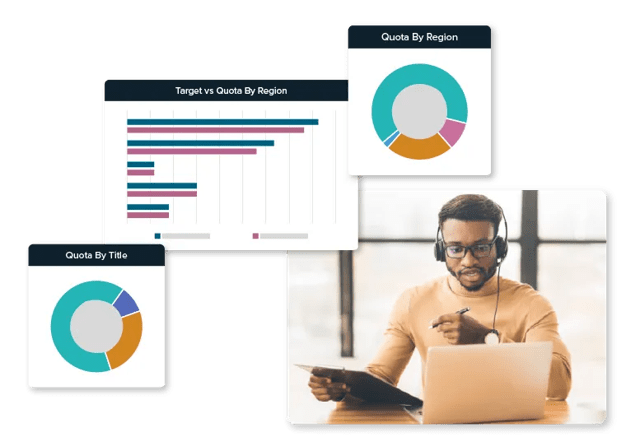
Operations leaders are required to know the what, why, and how of all processes throughout a business, not to mention the impacts on people and data should there be changes. Yet when digging into how territories and quotas are delivered, communicated, and assigned, they’re left searching for the details. This challenge compounds when new team members are hired, high-performers are promoted, or people leave the business and changes are required.
With Xactly, Operations leaders can:
- Gain clear visibility into sales, territory, and quota plans to make the required changes when necessary.
- Unify data to identify and ideate on potential adjustments, ensuring changes are aligned with top-down business objectives.
- Quickly deploy and communicate changes to teams and stakeholders from a singular platform for seamless data transfer and robust integrations to external systems.
Pipeline and Sales Forecasting
Revenue is the lifeblood of every business, requiring collaboration across go-to-market, Finance, and Operations teams. Naturally, this is an ideal place for operations experts to lean in. Yet, when looking to unify multiple data sources, create robust dashboards, and empower go-to-market leaders with insights to inform their strategy, they’re left wanting more.
With Xactly, Operations Leaders can reduce sales cycle with quicker wins and closing rates and, therefore, improve conversation rates. They can also:
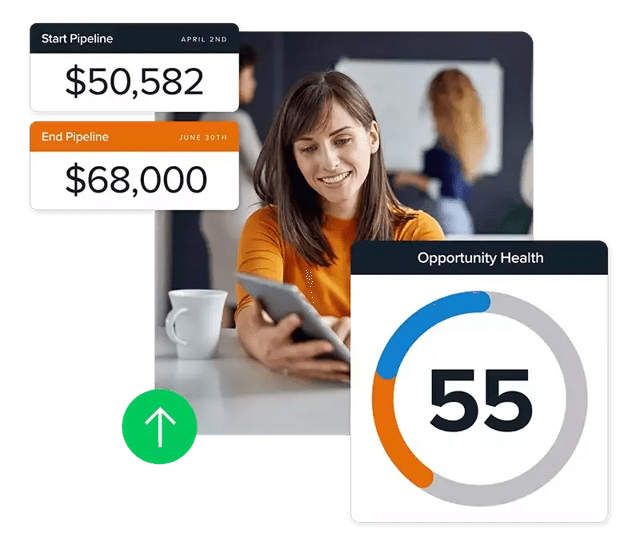
- Quickly spot pipeline trends, sales process and methodology compliance, and overall pipeline coverage.
- Support better sales execution and engagement with customizable health scoring for accounts and opportunities, supported by award-winning AI.
- Unify pipeline data with any external source to quickly and easily build reports and dashboards powered by AI to help go-to-market leaders triangulate their revenue predictions.
What Else Xactly’s Sales Operations Tools Provide
Incentive Compensation Management
Tailor compensation plans to activities and behaviors that accelerate revenue performance, no matter how unique the sales roles, and provide on-demand visibility into payouts for your team to keep them focused.
Incentive Design and Forecasting
Design ideal sales incentive plans by simulating different pay mixes, acceleration, performance distribution changes, and other factors that drive the behaviors to deliver desired outcomes for your business.

Sales and Revenue Planning
Work closely with Finance to ensure ideal capacity to optimize coverage across high value territories, segments, accounts, and more, while each member of the go-to-market team has fair and balanced quotas.
Frequently Asked Questions
How can sales organizations operationalize annual planning more efficiently?
Operationalizing annual planning requires shifting from a "one-and-done" event to a continuous, data-driven cycle. Organizations achieve this by integrating their Revenue Intelligence platform with their CRM to ensure planning is based on real-time performance rather than outdated spreadsheets. By using automated territory optimization and data-backed quota setting, leaders can quickly pivot plans mid-year in response to market shifts, ensuring that sales capacity always matches market opportunity without the typical 3-month manual planning lag.
What are the 6 steps of S&OP?
The Sales and Operations Planning (S&OP) process is a cross-functional monthly cycle designed to keep all departments in sync. The six standard steps include:
- Product Review: Evaluating new product launches and end-of-life strategies.
- Demand Review: Developing an unconstrained forecast based on sales and marketing inputs.
- Supply Review: Assessing manufacturing, inventory, and resource capacity.
- Financial Review: Aligning the proposed operational plans with top-line revenue targets.
- Pre-S&OP Meeting: Identifying gaps between demand and supply and drafting resolution scenarios.
- Executive S&OP Meeting: Finalizing the plan and allocating resources to ensure company-wide alignment.
What are the KPIs for sales and operations planning?
To measure the health of an S&OP process, organizations must look beyond simple revenue totals. Critical KPIs include:
- Forecast Accuracy: The variance between predicted sales and actual results.
- Demand Plan Bias: Identifying a consistent tendency to over or under-forecast.
- Inventory Turnover: Measuring how quickly stock is sold and replaced.
- Capacity Utilization: Ensuring that sales and production resources are being used at peak efficiency without burnout.
- On-Time In-Full (OTIF): The percentage of customer orders fulfilled on time and without missing items.
What is a sales planning tool?
A sales planning tool—like Xactly Plan—is a strategic platform used to architect the "revenue engine" of an organization. Unlike a CRM, which manages daily deals, a planning tool focuses on the structural execution of a go-to-market strategy. It allows leadership to:
- Define Account Segments: Categorize ideal customers to ensure the right reps are targeting the right profiles.
- Balance Territories: Distribute accounts and geographies fairly to maximize market coverage and rep productivity.
- Allocate Quotas: Set revenue targets by role that are both ambitious and attainable based on historical data.
- Determine Capacity: Use roster and headcount assumptions to determine exactly how many sellers are required to hit the annual goal.
With Xactly helping me understand industry standards, where things should be, what tools are available, that’s really been very helpful.

I have worked at other vendors and the kind of service that we get from Xactly, I have not seen that anywhere.

If you’re still doing work on Excel or homegrown, I would highly encourage you to look at an automated system. Not only will you have better reporting and analytics to understand where you are spending your money, but it will definitely help with the work-life-balance. Compensation is pretty complicated. You have people coming, you have people going, you’ve got quotas changing, people getting promoted…you need to have a system of record to manage all that. If you are doing it homegrown or you are doing it [by] managing it manually, it is going to get to the point where the scalability is not there.