
Revenue planning doesn’t fail all at once; it fails in fragments.
Territories assigned without sufficient data, quotas set before capacity is validated, and forecasting relies more on opinions than on operational truth. Over time, these small disconnects compound: Sales and Finance fall out of sync, productivity skews across teams, and leaders spend the year solving problems that trace back to assumptions that were never aligned from the get-go.
This way of working comes with real downsides. Without a clear sales plan, targets don’t reflect actual capacity, territories become uneven, forecasts drift, and sales reps burn out. When your plan is unclear, predictable revenue becomes nearly impossible.
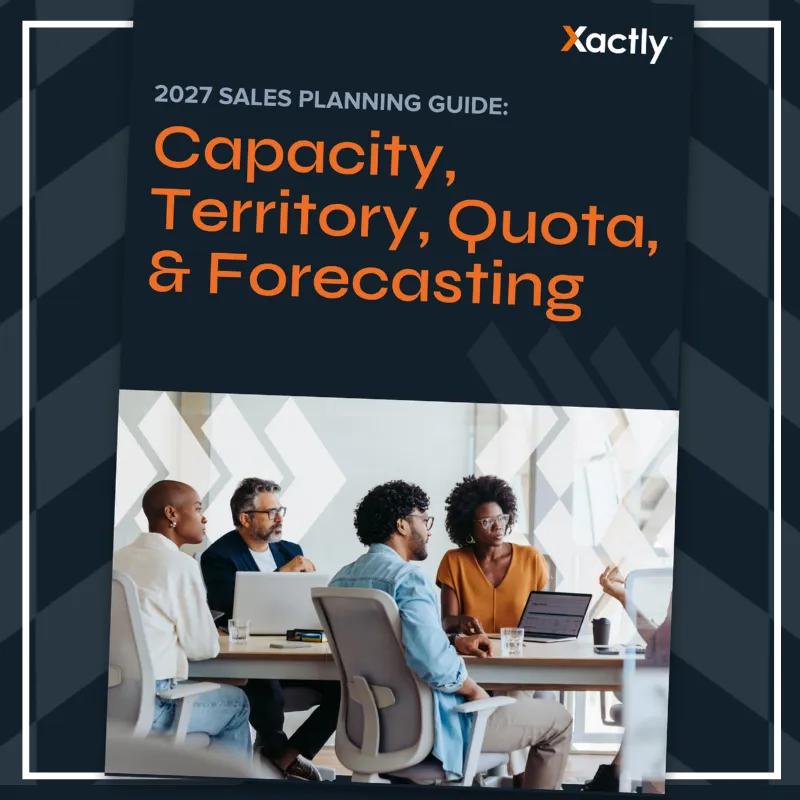
A solid sales plan clears obstacles and shows your team exactly what to do. It explains the reasons behind decisions and which actions drive results. This guide walks you through each part of a good sales plan and comes with a customizable template you can start using right away.
Download the Sales Plan Template
This guide and sales plan template help you create a sales plan. You’ll learn how to set goals, forecast, plan territories, define your ideal customer, and keep all teams working together.
What Is a Sales Plan and Why It Matters
A modern sales plan is more than just an annual target. It’s a cross-functional roadmap that defines how revenue gets delivered. It outlines the mechanics behind goals: the markets you’ll prioritize, the territories you’ll build, the quotas you’ll assign, the capacity you’ll need, and the forecasting logic used to track performance.
Sales shouldn’t create the plan alone. The best companies involve Sales Ops or RevOps, Finance, and go-to-market (GTM) leaders from the start. Working together helps avoid mistakes like setting quotas without considering the pipeline or making territories that don’t fit the market.
Poor planning does more than cause missed targets; it creates confusion. Without a clear structure, teams make quick decisions that lead to uneven results, bad forecasts, and uncertainty about what works. When Sales, Finance, and Operations follow the same plan, revenue becomes more predictable, and execution is smoother.
Core Components of a Sales Plan
The downloadable template includes each of these components and provides structured fields to guide your planning.
Executive Summary & Overview
The executive summary sets the direction for your entire sales plan. It should quickly establish your top revenue goals, the realities shaping your plan, and the priorities that matter most in the coming year.
Your executive summary should highlight:
- North-star goals: revenue targets, margin expectations, priority segments
- Business context: competitive shifts, budget constraints, major product releases
- Priorities: expansion, enterprise growth, efficiency, or forecast accuracy
- Key assumptions: market readiness, expected pipeline behavior, or operational constraints
This section doesn’t need to be long; it just needs to be clear. When everyone understands the constraints, goals, and assumptions from the start, every decision that follows becomes sharper and far more aligned.
Target Market & Ideal Customer Profile (ICP)
A strong ICP is sharper and more actionable than a broad target audience. Mature sales organizations segment ideal customers by industry, company size, buying triggers, and specific pain points — aligning those details with market demand and the company’s GTM strategy.
Consider how organizations use forecasting intelligence and territory planning tools like Xactly Forecasting and Xactly Plan to validate ICP assumptions with historical patterns and predictive AI insights. If a segment consistently produces shorter sales cycles or higher lifetime value, your plan should account for that and prioritize accordingly.
Prioritization is just as important as definition. If your ICP spans multiple strong segments, rank them by market readiness, total addressable market, or strategic fit. As your product evolves and data grows, your ICP should evolve too, especially when entering new markets or testing new GTM motions.
Sales Plan & Go-To-Market Motion
Your GTM motion defines how revenue will be generated and the level of structure your plan requires. Enterprise motions demand deeper coordination and longer cycles; transactional motions rely on volume, velocity, and tight alignment with Marketing.
Your plan should clarify:
- Where pipeline comes from: inbound, outbound, partners, Product-led-growth (PLG), or a blend
- How each motion contributes to revenue and when it performs best
- How pricing, packaging, and renewals support the model
- How Sales, Marketing, CS, and RevOps work together across the buyer journey
This is also where you outline the plays you’ll rely on, from ABM campaigns to outbound sequencing to expansion motions within your existing customer base. Top organizations update their sales planning strategy as buyer behavior shifts, and research consistently shows that adaptability drives better revenue outcomes.
Your GTM motion doesn’t need to be complicated; it needs to be intentional, clearly documented, and aligned with how your buyers actually make decisions today.
Revenue Goals & Quota Planning
Quota planning needs to be realistic, not just optimistic. Begin with past results, average deal sizes, conversion rates, and rep productivity. Then factor in market conditions, new product launches, and capacity plans to set quotas that are tough but possible to reach.
Break down your revenue goals by region, segment, vertical, or product line to show where growth will come from and how each part of your plan connects. Ensure that quota targets align with your compensation plan, so representatives understand how their performance impacts their pay. When quotas and commissions work together, you get fewer disputes, more motivation, and better results.
Scenario modeling enhances how robust your plan is. By testing different scenarios, such as lower win rates, longer sales cycles, or changes in customer mix, Sales and Finance can determine whether targets remain realistic. This helps spot risks early, keeps teams aligned, and lowers the chance of surprises during the quarter.
Roles, Territories & Capacity Planning
This section should outline each role — Account Executive, Sales or Business Development Representative, Account Manager, Customer Success, and RevOps — and the specific responsibilities associated with each. For territory design, consider geographic potential, vertical specialization, account density, and historical performance. Mature teams rely on data-driven tools like Xactly Plan to support territory, quota, capacity, and coverage planning, ensuring decisions are consistent, fair, and rooted in objective data.
Capacity planning means honestly looking at lead volume, pipeline needs, how long it takes reps to ramp up, and productivity standards. A territory may seem promising, but if Marketing can’t keep up with pipeline needs, quotas will be missed. Sales, Marketing, and Finance must stay closely aligned.
Pipeline & Forecasting Methodology
Many sales plans break down at the forecasting stage, not because the math is complicated, but because the assumptions behind it aren’t consistent. Clear stage definitions, regular pipeline reviews, and a forecasting cadence that matches how your team actually operates go a long way toward creating a healthier, more predictable pipeline.
Teams that rely only on sales rep sentiment or static CRM stages often end up with forecasts that swing wildly from week to week. The most reliable forecasts come from layering in behavioral signals, historical win patterns, and predictive insights. Tools like Xactly Forecasting help teams do exactly that by adding AI-driven deal health indicators and real-time performance signals. It’s an approach that aligns with research on forecasting best practices during uncertain markets.
Your forecasting model should also match your GTM motion. High-velocity teams might forecast weekly and lean heavily on coverage ratios, while enterprise teams might anchor forecasts in stakeholder engagement, deal progression, and multi-threading indicators. No matter the motion, your plan should clearly spell out the KPIs, confidence levels, and thresholds that determine how deals move through each category.
Risks & Dependencies
A strong plan doesn’t avoid risk; it anticipates it. This section should call out dependencies across Marketing, Product, and Finance, including required pipeline volumes, feature release timelines, pricing changes, competitive movements, and hiring constraints.
For example, if your plan counts on a new integration launching mid-year, explain how delays could slow down deals. If Marketing needs to deliver a set number of leads, show what happens if they don’t. Being open about these risks helps teams spot problems early and adjust without throwing off the whole plan.
Template Modules: Which One Fits Your Business?
The sales plan template has modules for different growth stages. Choosing the right one ensures your plan fits your company’s real situation, not just an idealized version.
Module A: Early-Stage / High-Growth (Startup & Growth) Plans
Early-stage teams need to be agile, not complicated. This module helps you narrow your ICP, choose your first acquisition channels, test pricing, and track key metrics like customer acquisition cost (CAC) and month-over-month growth. Instead of building complex territory models, the focus is on quickly finding what works.
Use this module if you’re validating product-market fit, exploring early verticals, or scaling brand-new motions.
Module B: Onboarding / Transition: 30-60-90 Day Plans
Module B is built for predictability. Whether you’re hiring a new rep or opening a new territory, the first 90 days are key for long-term success. Clear milestones, from training to building a pipeline to submitting early forecasts, help leaders track progress and spot coaching needs early.
Teams use this module to standardize expectations and ensure new hires transition from learning to execution smoothly.
Module C: Scaling / Mature Sales Organization (Alignment & Forecasting Focus)
Mature organizations need strong forecasting and alignment. Module C tackles the issues that come up as your team grows, like territory disputes, uneven quotas, pipeline problems, and long planning cycles.
This module focuses on using data to optimize territories, track key metrics like revenue and churn risk, and analyze pipeline speed. It also works well with tools like Xactly Manage and Xactly Intelligence to keep territory management, quotas, and forecasts fair and accurate.
Key Metrics & KPIs You Should Track
Modern sales planning requires a multi-dimensional view of performance. Closed-won revenue alone can’t reveal whether your plan is working. You need pipeline health, rep productivity, forecasting accuracy, and retention insights.
Productivity metrics such as revenue per rep and ramp time indicate whether your hiring plan matches expectations. Pipeline metrics like coverage, deal size, and cycle time help assess whether Marketing and Sales are jointly supporting the GTM strategy. Forecasting metrics reveal whether your process is consistent and reliable. And for subscription businesses, expansion MRR and net revenue retention offer critical insight into long-term revenue health.
Modern B2B sales performance is increasingly shaped by hybrid buying behavior, where digital and in-person motions operate together. Research shows that organizations integrating both motions — and tracking performance across them — tend to achieve greater predictability and scalability.
How to Align Your Sales Plan with Revenue Operations & Finance
Alignment is key to predictable revenue. If Sales, RevOps, and Finance use different assumptions, even the best plans can fall apart because of conflicting priorities.
This section should detail how revenue goals tie back to financial models, how quota assignments reflect capacity, and how hiring timelines correlate to pipeline expectations. It should also address the relationship between compensation design and quota fairness. Resources like our Sales Compensation Plans Cheat Sheet help ensure compensation structures reinforce the behaviors your plan is built on.
Good alignment stops problems like overlapping territories, budget mismatches, and inconsistent forecasting. When done right, it connects all your revenue teams.
Best Practices for Building & Maintaining an Effective Sales Plan
An effective sales plan isn’t set in stone. Changes in the market, product, or pipeline mean you need to update it regularly. Top companies build flexible plans that can be revised and reviewed monthly or quarterly to ensure their assumptions remain valid.
Write down every assumption, like win rates, ramp times, and deal sizes, so leaders can review them as things change. Planning together keeps everyone on the same page, and building forecasts from the ground up helps Sales and Finance trust each other.
Common Mistakes & Pitfalls to Avoid
Organizations often make mistakes by skipping the ICP or making plans too complex too soon. Some rely too heavily on gut feeling for forecasts or create territory plans that don’t align with the market. Others don’t update the plan, so old assumptions stick around even after things change.
Spotting these mistakes early helps you avoid problems later in the year and makes it more likely you’ll hit your quotas.
How to Use the Free Sales Plan Template (Download + Customize)
The template is designed to accelerate planning regardless of your maturity. Start by downloading the template, selecting the module that matches your current state — Startup, Onboarding, or Scaling — and customizing each section with your ICP, revenue goals, territories, and forecasting assumptions.
Share your finished plan with Sales, Finance, Marketing, and RevOps to make sure everyone is on the same page. Once it’s ready, link your plan to your CRM, analytics, compensation, and forecasting tools to track progress in real time.
From Planning to Performance: Bringing Your Sales Plan to Life
Sales planning is more than a yearly task; it’s the foundation for predictable revenue. With clear ICPs, smart territory models, data-driven quotas, and teamwork across departments, your plan becomes a living guide for the whole year.
The Sales Plan Template gives you a clear framework to start or improve your approach. Use it to set clear goals, improve forecasting, and get your teams working together on a shared sales plan for 2026.
Ready to build a sales plan built for today’s revenue reality?
Download the free Sales Plan Template, tailor it to your business stage, and align your sales plan, territories, and forecasts for steady growth.
Download Sales Plan Template!